
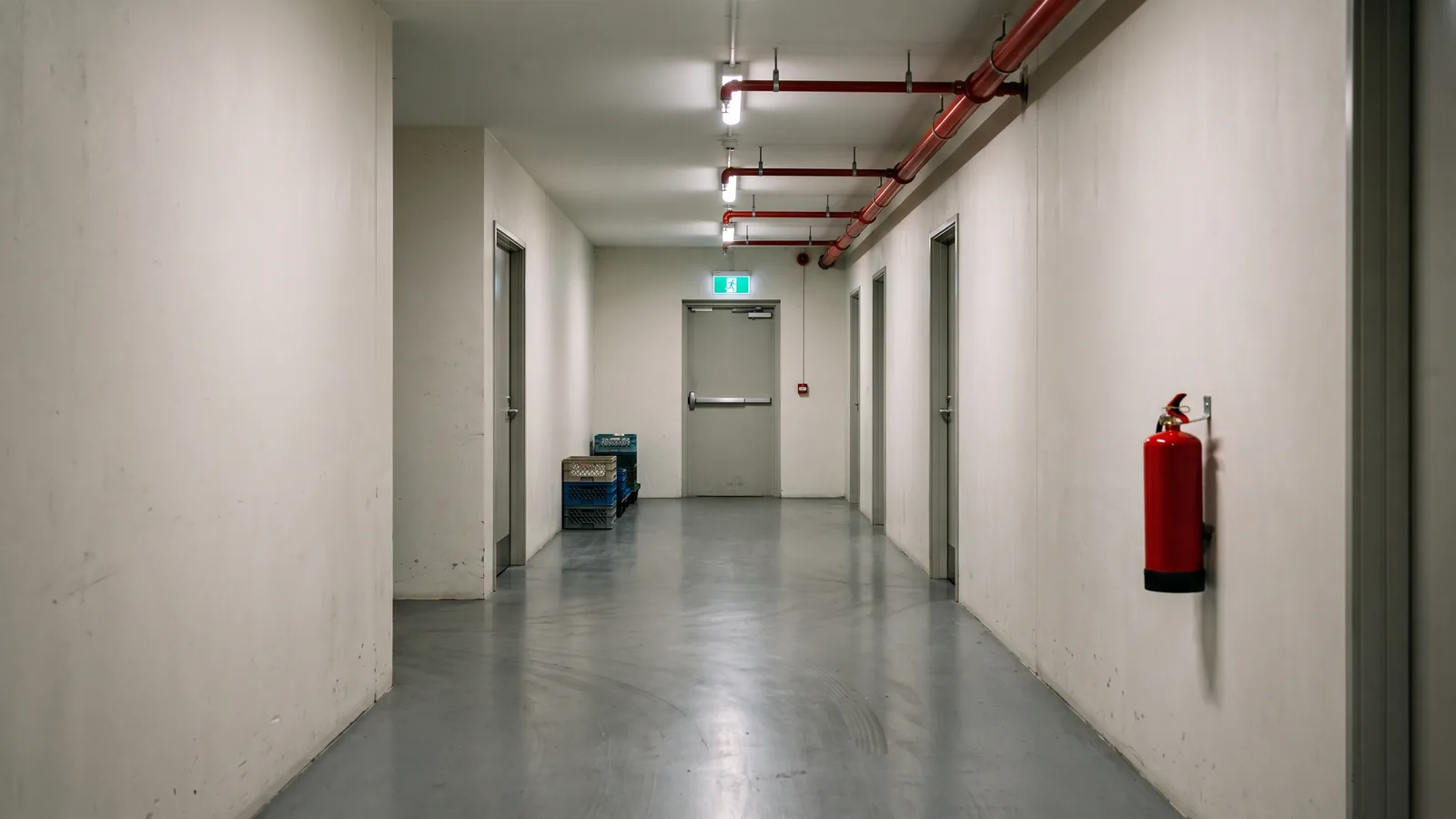
Passive versus active fire protection
Passive protection is part of the space itself. It includes the logic of escape routes, exits, fire separation and fire-rated elements where required. It is not replaced by placing more extinguishers on a wall. The layout, doors and storage discipline are part of the risk review.
Active protection detects, warns or suppresses fire. Depending on the activity and premises, it may include extinguishers, emergency lighting, alarms or a suppression system. Selection and quantities are not universal. Start with a fire safety study based on the actual operation.
| Passive protection | Active protection |
|---|---|
| Escape routes and exits | Detection and warning |
| Fire compartments and separation | Extinguishers and suppression |
| Fire-rated doors and elements | Emergency lighting where required |
Shop fire safety file checklist
Completed: 0/9
- Completed
- Completed
- Completed
- Completed
- Completed
- Completed
- Completed
- Completed
- Completed
This checklist is indicative. An engineer confirms what is required for the specific property or project.
What an overseas owner or operator should check
Record the activity, approved use, floor area, levels, storage, kitchen and specialist equipment. Gather the drawings, studies, certificates, maintenance records and evidence of previous changes. If the landlord holds the base building file, agree how the tenant fit-out will be added to it.
On site, the engineer checks exits, routes, doors, signs, emergency lighting, electrical boards, hot work, storage and access. Fire safety and accessibility should be reviewed together where a new layout affects movement. An English report can separate confirmed evidence, missing documents and open decisions.
If the file does not match the premises, treat the mismatch as an action. An old certificate is not proof that today’s layout and equipment have been checked.
Study, installation and certification
The process begins with an activity review and site survey. The engineer checks the applicable framework, drawings, escape routes, hazards and required systems. If a study or administrative act is required, it follows the relevant technical route, including e-Άδειες where applicable.
Installation is followed by commissioning and evidence collection. The handover file should identify what was installed, where it is, who tested it and how future checks will be recorded. No certificate or approval should be promised before the activity and premises have been assessed.
See the official gov.gr fire-safety approvals and certificates service. The Greek Building Fire Protection Regulation must be applied according to the use and building context.
Equipment and recurring maintenance
The owner or operator needs a named person for each part of the file. The engineer checks the technical scope, installers provide commissioning evidence, maintenance contractors keep service records and an FM provider coordinates recurring actions when that is included in the contract.
| Role | Action | Evidence |
|---|---|---|
| Landlord | Provides base-building records and approvals | Building file |
| Tenant | Reports layout and operational changes | Fit-out record |
| Engineer | Checks use, study and requirements | Drawings and report |
| Maintenance contractor | Tests equipment | Service sheets |
| FM provider | Tracks actions and reporting | Register and report |
Recurring checks and maintenance should be written around an owner, frequency, evidence and close-out process.
Fit-out and opening risks
A new layout, mezzanine, storage method, kitchen, change of use, door, sign or electrical network can change the review. Check before ceilings and walls close, and before the shop reopens. For a retail rollout, keep one controlled drawing set and a handover pack for each site.
Do not copy the equipment list from another store. The design basis must fit this activity and premises. Link the fire review to the retail fit-out process and the landlord approval route.
Common mistakes
- Expired or disconnected records.
- Blocked exits, routes or doors.
- Missing service sheets and tests.
- Drawings that do not match the fit-out.
- Equipment bought without a design basis.
Preventive maintenance works only when the scope, responsibility and evidence are clear.
Sources: Fire safety approvals and certificates, gov.gr, P.D. 41/2018, kodiko.gr, OpenBusiness notifications. Last checked: 2026-09-06.
Frequently asked questions
Does every shop need a fire safety certificate in Greece?
There is no single answer. The duty and route depend on the activity, use, building, size, risk and works. A qualified engineer checks the current framework and confirms the position for the specific premises.
What is included in a shop fire safety study?
It considers passive and active protection, escape routes, openings, equipment, hazards, use and records. The content is not a universal equipment list. An engineer confirms the scope for the premises and activity.
What is the difference between passive and active fire protection?
Passive protection is built into the space and supports escape and fire separation, including routes, exits, compartments and fire-rated elements where required. Active protection detects, warns or suppresses fire, where the project design requires it.
Who is responsible for recurring fire safety checks?
The owner and operator must keep the premises and records in working order. The engineer and specialist maintenance contractor cover the technical parts assigned to them. An FM contract should name each owner, frequency, report and close-out action.
What changes after a shop fit-out?
A new layout, change of use, kitchen, storage, mezzanine, door, façade or electrical installation can change the review. Compare the approved drawings with the proposed fit-out before work starts and obtain a project-specific technical check.